
The Politics of What We Wear: Indigenous Influence and Cultural Power
Indigenous design is absorbed into mainstream fashion narratives, without the equivalent credit, or attention to Native American political presence. To put it simply, the 'aesthetic' translates easily to the fashion community, but the context through which it exists, does not.
While scrolling through Instagram in December of 2023, a post from Ralph Lauren catches my attention. It is announcing a collection with the Indigenous American (Navajo) designer, Naiomi Glasses, who will be part of their Artists in Residence programme. What stood out to me was not just how beautiful the collaboration itself was, but the way in which it was framed. The sophisticated language, and the familiar aesthetic of Ralph Lauren's Americana was translated through Native American reference points and designs. It felt expected to me, like this was a common occurrence for fashion houses.
But largely it is not. I then found myself thinking about how often Indigenous design is absorbed into mainstream fashion narratives, without the equivalent credit, or attention to Native American political presence. To put it simply, the 'aesthetic' (a word that I, ironically, hate) translates easily to the fashion community, but the context through which it exists, does not. Indigenous American influence is visible across the fashion industry, but their rights and political agency remain far less visible in the cultural spaces that profit from that influence.
The legendary American photographer Bill Cunningham once said “Fashion is the armour to survive the reality of everyday life.” For many Indigenous North American communities, their cultural dress has served precisely, as armour. Used to protect their cultural identity whilst also asserting political agency in a system that often forgets about them. The image of a tribal chief above, whom I was unable to name, and President John F. Kennedy proves this simple point because his clothing becomes political. The way in which the chief occupies the same visual and political space as the President of the United States, whilst in traditional dress, communicates a quiet but powerful statement, one that says “we are still here”.
The Warbonnet, worn by Indigenous Communities of the Great Plains, communicates exactly this. Apart from being a symbol of achievement and bravery in battle, the construction of the headdress is incredibly compelling and intimidating. Whilst various styles exist, they all typically feature eagle feathers, an animal that is significant within ancient Plain traditions. They are thought to be the messengers between humans beings and the Creator. By wearing this, warriors were almost becoming the eagle themselves. A quote from the book 'American Indian and Legends' precisely highlights this fact:
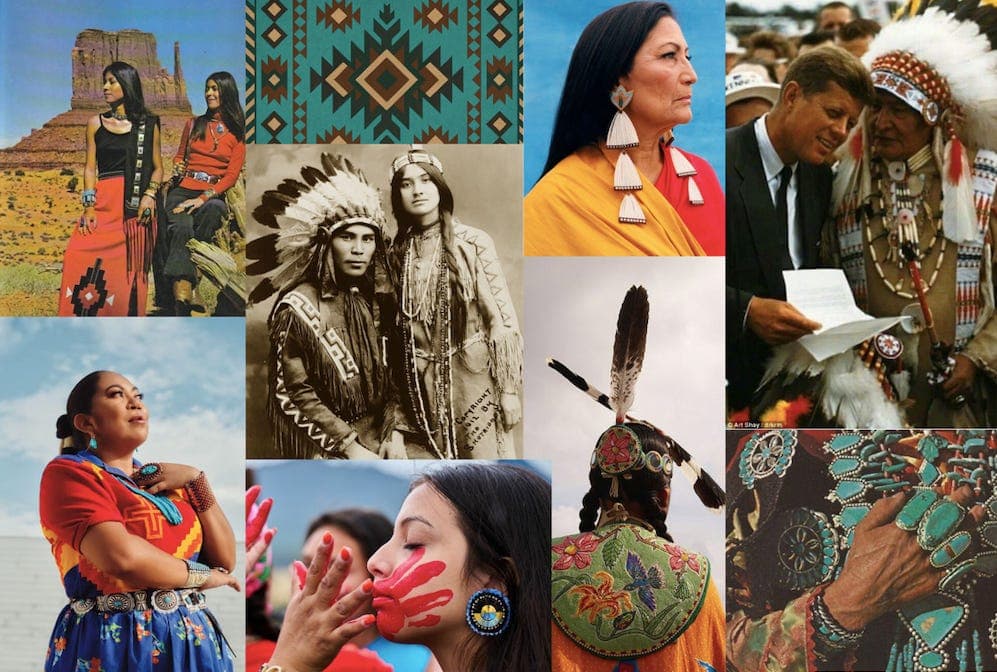
He had the fierce, proud face of a hawk, and his deeds were legendary. He always rode into battle with a long warbonnet trailing behind him. It was thick with eagle feathers, and each stood for a brave deed, a coup counted on the enemy.
Now, warbonnets are received by both men and women for more than just martial reasons. For instance, gaining an educational degree can initiate the ownership of a warbonnet. Therefore, it is not a mere fashion accessory that popular culture often takes advantage of, it conveys the heritage, craftsmanship and power of Indigenous tribes.
The significance of beading as an art form is also important. After beads were introduced to Native Americans in the 16th Century, by Europeans who traded them for animal skins, meat and fur, it became a central method of creativity and expression within their communities. Knowing what tribes created certain beadwork adorned on shoes, ceremonial objects or dresses, for example, were identified through specific patterns. Plains tribes would use complex geometric patterning, whilst Southeastern tribes would often adopt floral motifs on their beading.
In fact, as we know, Native Americans have long been contributors to everyday culture. Potatoes, pumpkins, lacrosse, canoes, the word 'hammock', tobacco, Boy and Girl Scouts and relay-races are just a few of the contributions from the Native people that we participate in, and use, daily.
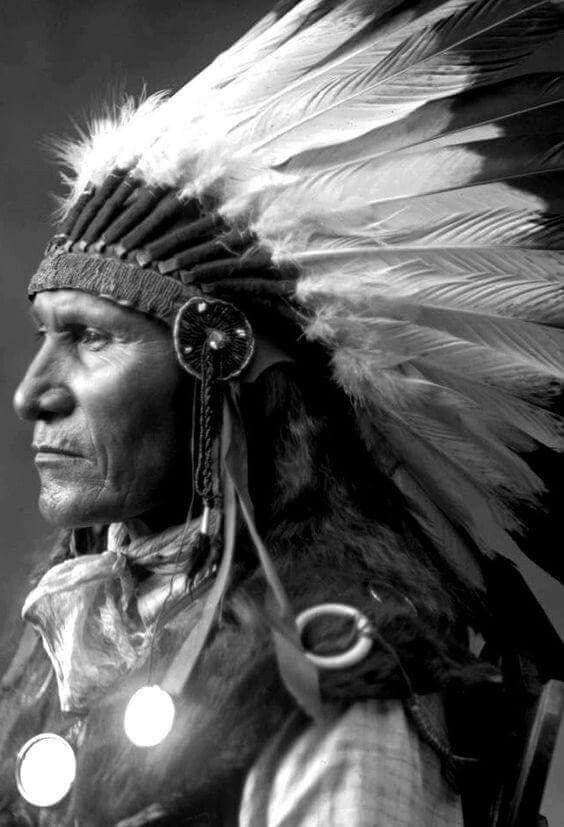
Admittedly, and unbeknownst to me at the time I discovered the collaboration mentioned above, much of my own personal style is inspired by Indigenous design and textiles. Intricate beading, woven tribal patterns, turquoise jewellery and fringing in my everyday wardrobe have long been rooted in Native North American cultural and artistic traditions for thousands of years. Specifically the Navajo tribal prints on my cardigans, or fringed earrings that I wear most days. However, I was not aware of the daily struggles that Indigenous communities face.
So, it would be reductionist to not acknowledge the hurdles that the Native (North) American people have to overcome, to be heard. One such organisation that caught my attention during my research was the National Indigenous Women's Resource Center (NIWRC), whose work raises awareness around the disproportionate rates at which Indigenous women experience violence, sexual assault, and disappearances across North America. Simultaneously, the rate at which this is reported within mainstream media is quite honestly, abysmal, to say the least. Approximately 95% of these cases go unreported. Similarly, their struggle is not just reduced to personal rights, but also that of land and property. The 2016-2017 Dakota Access Pipeline Protests are one such instance where the sheer power of Indigenous agency comes to the forefront of political landscape. This is not reduced to 'special events' either, with many tribal communities across the U.S hosting marches for missing and murdered indigenous people as recently as 8 weeks ago, in Grand Rapids Michigan for example.
This culture that is seemingly understood through moodboards and runway collections is still fighting for basic representation and adequate protection.
This is precisely where the Politics of What We Wear becomes impossible to separate from the realities of struggle. Indigenous identity is often celebrated in a material sense within fashion, but the political realities of Indigenous communities remain practically invisible in mainstream conversations. This culture that is seemingly 'understood' through moodboards and runway collections is still fighting for basic representation and adequate protection.
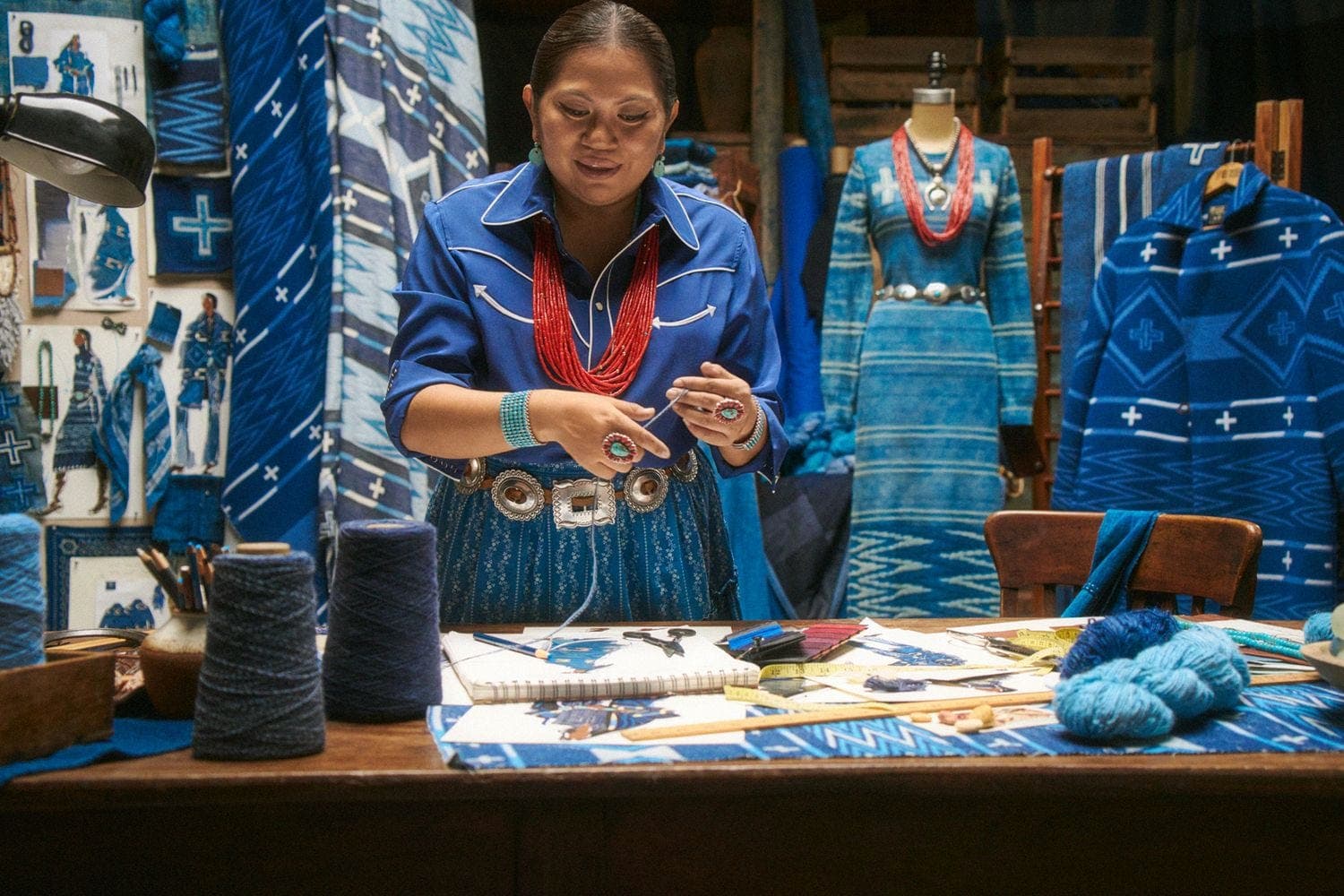
This is why collaborations such as Ralph Lauren and Naiomi Glasses feel culturally significant, as they suggest a small movement away from appropriation and towards respect. I personally think that there is a powerful distinction between fashion borrowing from Indigenous culture, and Indigenous designers actively participating in how their culture is represented within the fashion world. The former removes the context discussed above, and the latter reinforces Indigenous 'agency', a word that I come across often, as a Politics graduate.
This is why Indigenous clothing carries such political weight. It is not simply decorative nor merely historical. It serves as a catalyst to resistance and survival. What they wear can communicate lineage, spirituality, land, community and sovereignty all at once. In that sense, Indigenous fashion is not only about visibility, but refusal. A refusal to disappear into a culture that has repeatedly attempted to erase Indigenous presence whilst simultaneously profiting from Indigenous aesthetics.
The industry celebrates diversity visually, yet often struggles with what genuine cultural recognition actually requires. Indigenous fashion should not only be admired for its beauty, but understood through the political, historical and cultural realities that give it meaning in the first place.
If it was worth your time
What did you make of it?
There are many ways to read a piece of writing and I would like to hear yours — agreement least of all. Whatever you leave sits under this essay only.
Loading…
When there is a new essay
I write when I have something worth saying, which is not often. Leave your email and I will tell you when the next one is up. Nothing else.